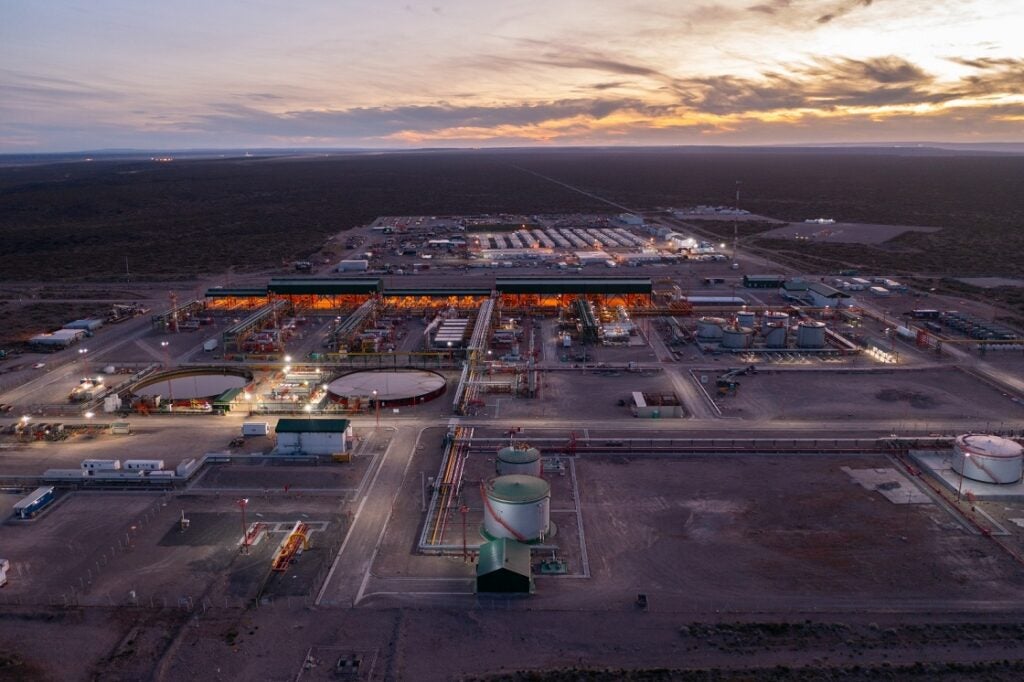
March 8, 2026 [Google translated from Spanish] – The development of Vaca Muerta not only generates economic expectations, but also new environmental challenges that are beginning to occupy a central place on the energy agenda. In this context, the unconventional formation will be the site of a technical meeting that will seek to discuss how to reconcile the expansion of oil and gas production with sustainability criteria and environmental protection.
The event will take place on March 19 at the Neuquén Scientific and Technological Hub and will bring together international specialists to analyze water management and soil recovery in the development of unconventional hydrocarbons. The initiative is jointly promoted by the Argentine Institute of Petroleum and Gas and the prestigious American university Rice University, an academic institution recognized for its link with the global energy industry.

The meeting aims to provide technical perspectives on one of the most debated topics surrounding the productive growth of Vaca Muerta. Increased activity in the Neuquén Basin involves managing large volumes of water used in hydraulic fracturing and hydrocarbon production. Proper management of these resources is emerging as one of the main challenges for sustaining the sector's long-term growth.
The event will feature international specialists with extensive experience in research and technological development applied to energy. These include Pedro Alvarez, Eric Willman, Menachem Elimelech, Qilin Li, and Mason Tomson. They will share their experiences and technological advancements related to water management, environmental remediation, and operational efficiency in energy projects.
One of the main focuses of the debate will be the treatment of produced water and the so-called flowback, which is the fluid that returns to the surface after hydraulic fracturing processes.Managing these volumes requires advanced treatment, reuse, and control systems to reduce the water footprint of operations and ensure the continuity of activity over time.

In addition to water resources, another key issue will be soil management in areas where oil activity is intensifying. The expansion of well sites, roads, and facilities necessitates the design of bioremediation and environmental restoration strategies to preserve local ecosystems while industrial development progresses.
The event also aims to strengthen collaboration among the various stakeholders in the Vaca Muerta energy ecosystem . Provincial governments, companies in the sector, scientific institutions, and technical agencies have been working together to support the growth of the industry with knowledge and innovation tools. In addition to the Argentine Institute of Petroleum and Gas and the Neuquén Science and Technology Park, this institutional framework includes specialized organizations such as CIATI, which collaborate on developing solutions for the sector.