Sep. 21, 2026
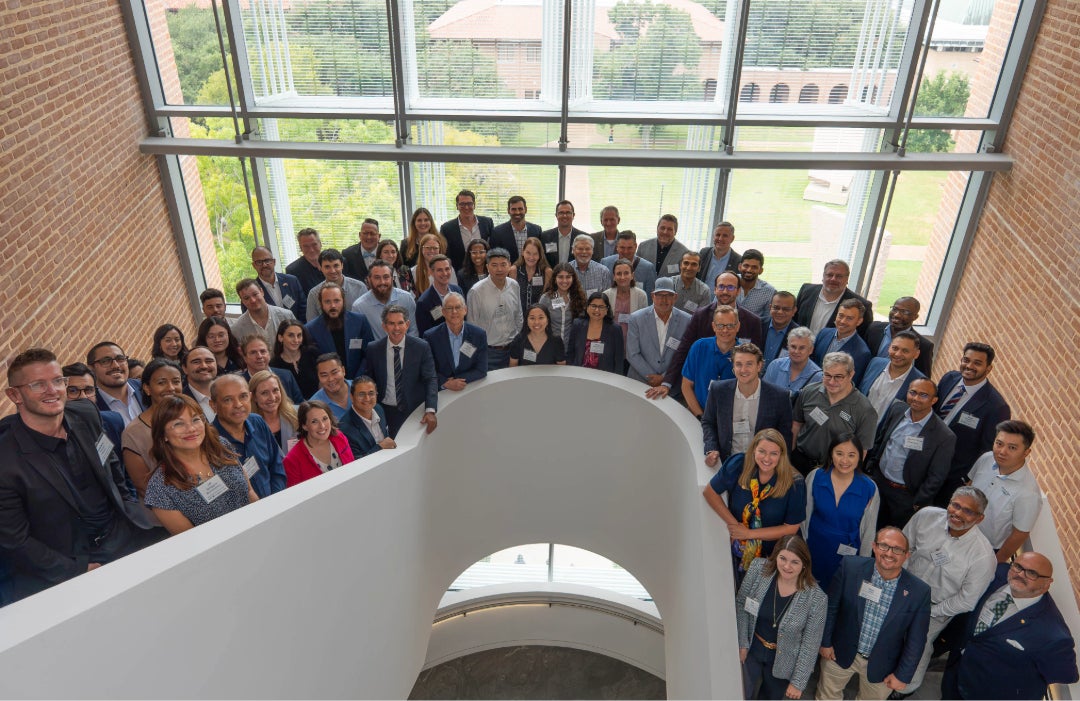
Texas’ next era of economic growth may depend as much on water as it does on energy, technology or capital.
Sep. 21, 2026
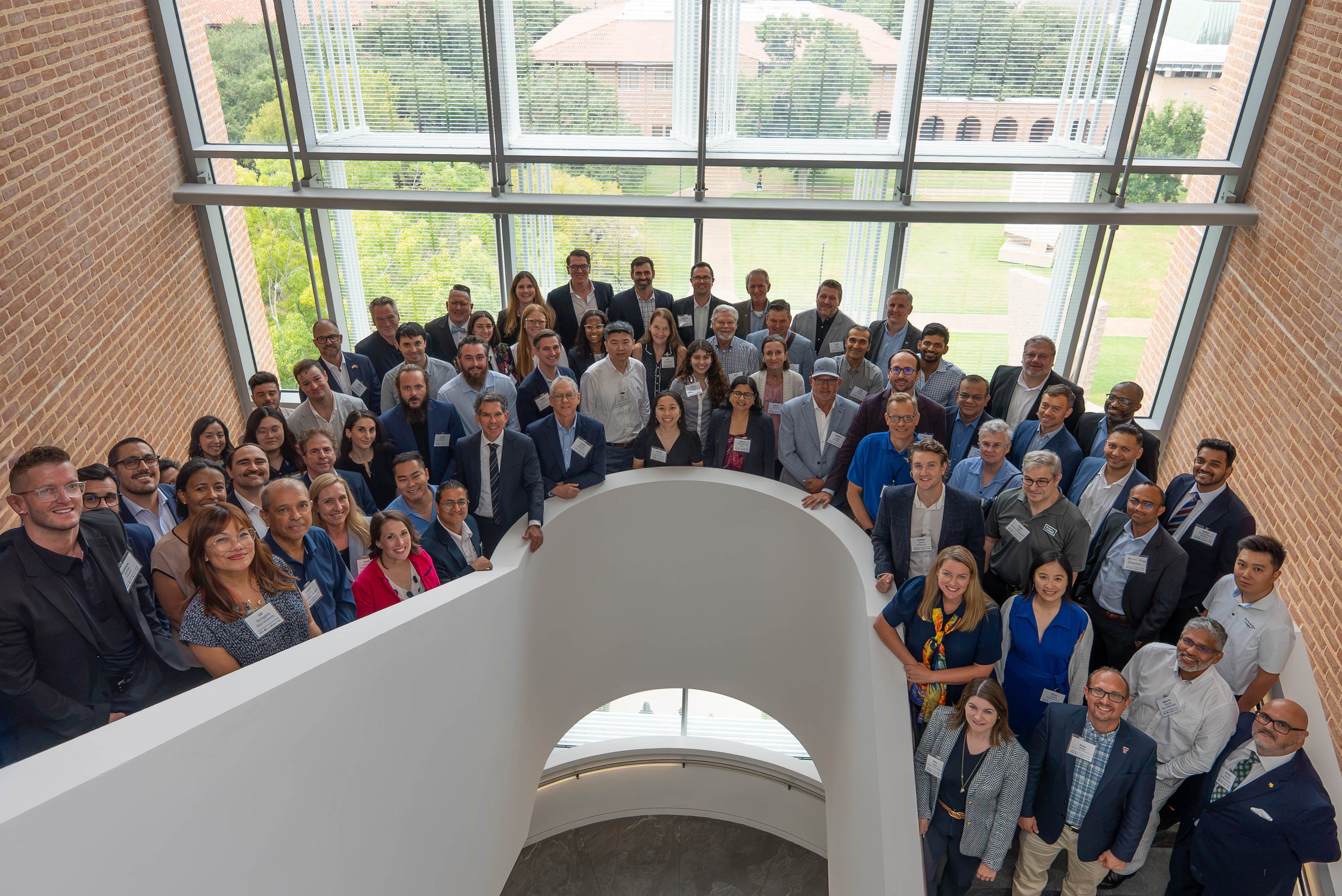
Texas’ next era of economic growth may depend as much on water as it does on energy, technology or capital.
Jul. 30, 2026
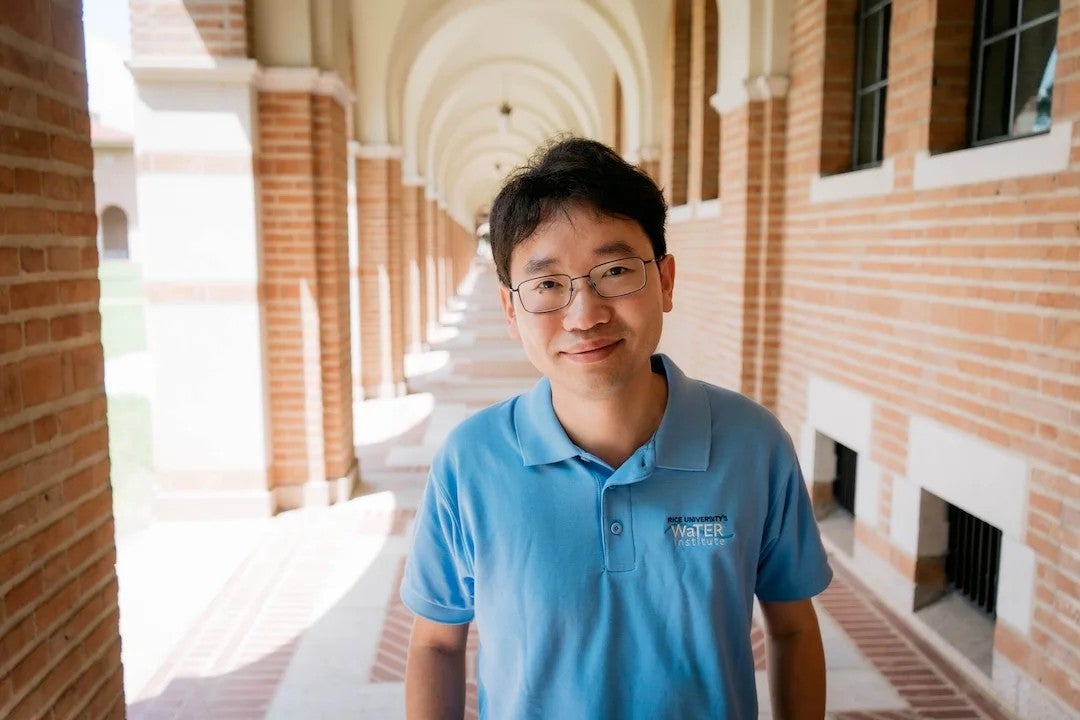
Industrial wastewater from electronics manufacturing, metal processing and other sectors often contains two difficult pollutants at once: high levels of salt and toxic heavy metals. Current treatment methods typically address those problems separately, creating costly, complex systems that can produce hazardous brines or metal-laden sludge. Now a group of researchers at Rice University and Vanderbilt University have created an electrochemical platform that could do both jobs at once.
Jun. 30, 2026
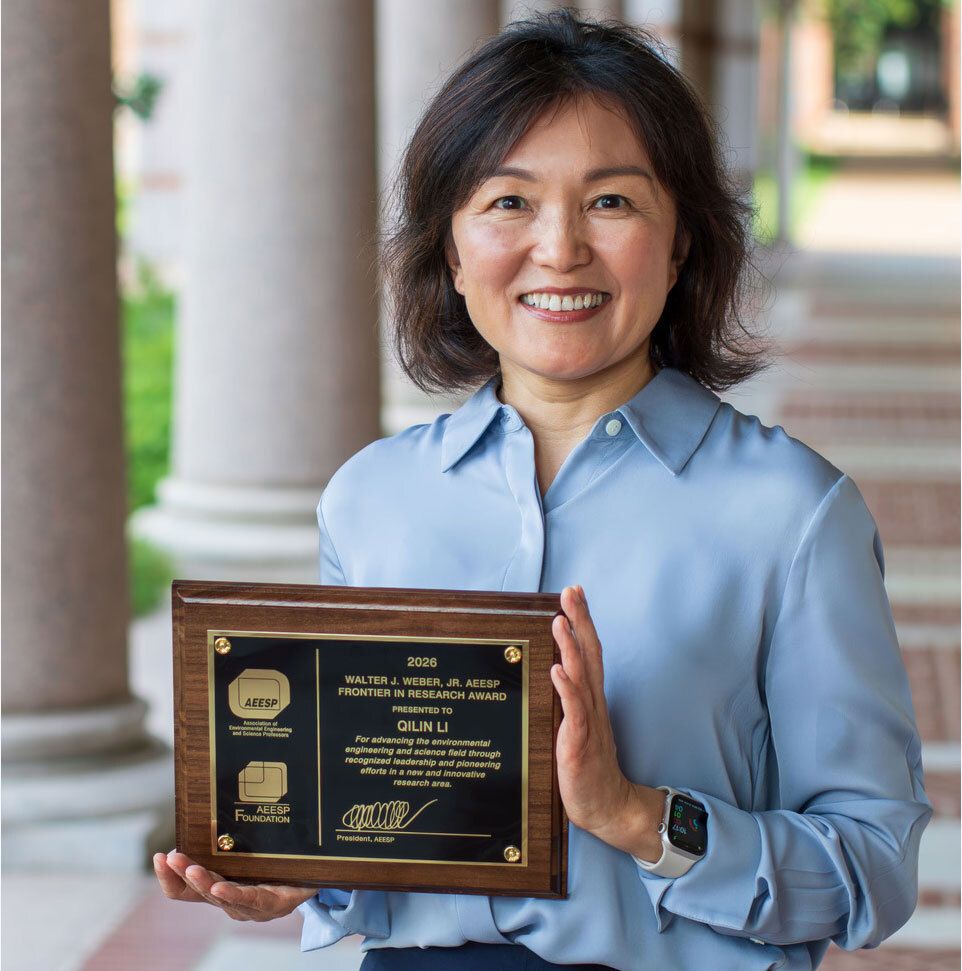
Rice University’s Qilin Li, the Karl F. Hasselmann Professor of Civil and Environmental Engineering, has received the 2026 Walter J. Weber, Jr. AEESP Frontier in Research Award from the Association of Environmental Engineering and Science Professors (AEESP).
AEESP is the premier global organization for academics, researchers, and educators dedicated to developing and implementing environmental protection technologies, and this is the highest honor it bestows for innovative research.
Jun. 9, 2026
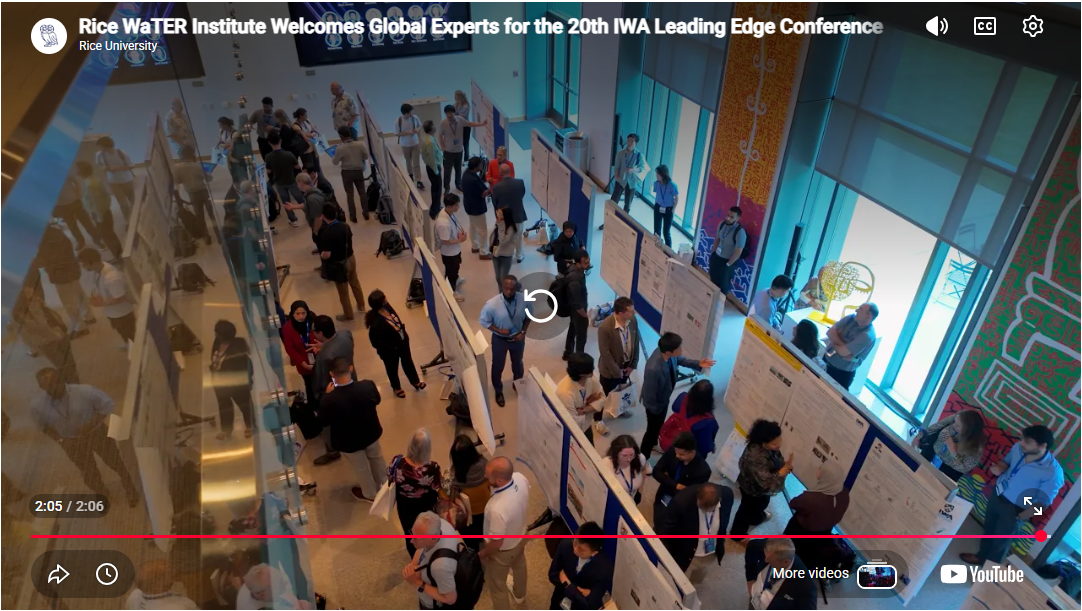
As communities around the world grapple with aging infrastructure, water scarcity, emerging contaminants and the growing impacts of climate change, researchers at Rice University are advancing technologies aimed at making water systems more resilient, sustainable and adaptable.

May. 19, 2026
Pedro J. J. Alvarez tells The Source what delegates can expect from the 20th IWA Leading Edge Conference on Water and Wastewater Technologies.
May. 7, 2026
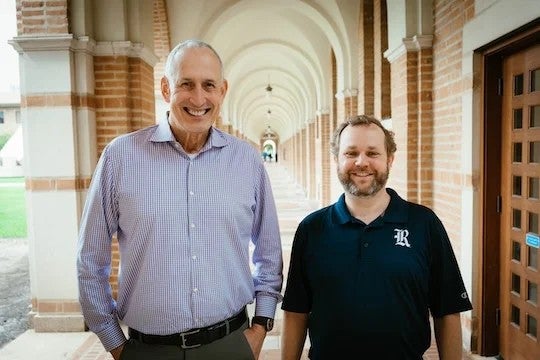
Rice University and Baylor College of Medicine (BCM) have renewed their joint Superfund Research Program with a nearly $15 million, five-year grant from the National Institute of Environmental Health Sciences to advance detection, health research and cleanup technologies for a class of hazardous pollutants known as polycyclic aromatic hydrocarbons.
Apr. 27, 2026
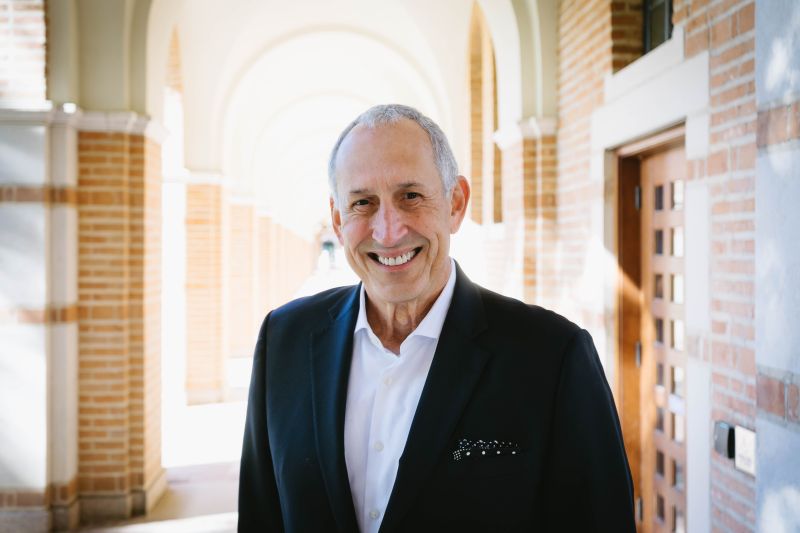
Rice University’s Pedro J.J. Alvarez, a world leader in environmental nanotechnology and water sustainability, has been awarded the 2026 Benjamin Franklin Medal in Civil Engineering, one of the oldest and most prestigious science and engineering honors in the United States.
Mar. 31, 2026
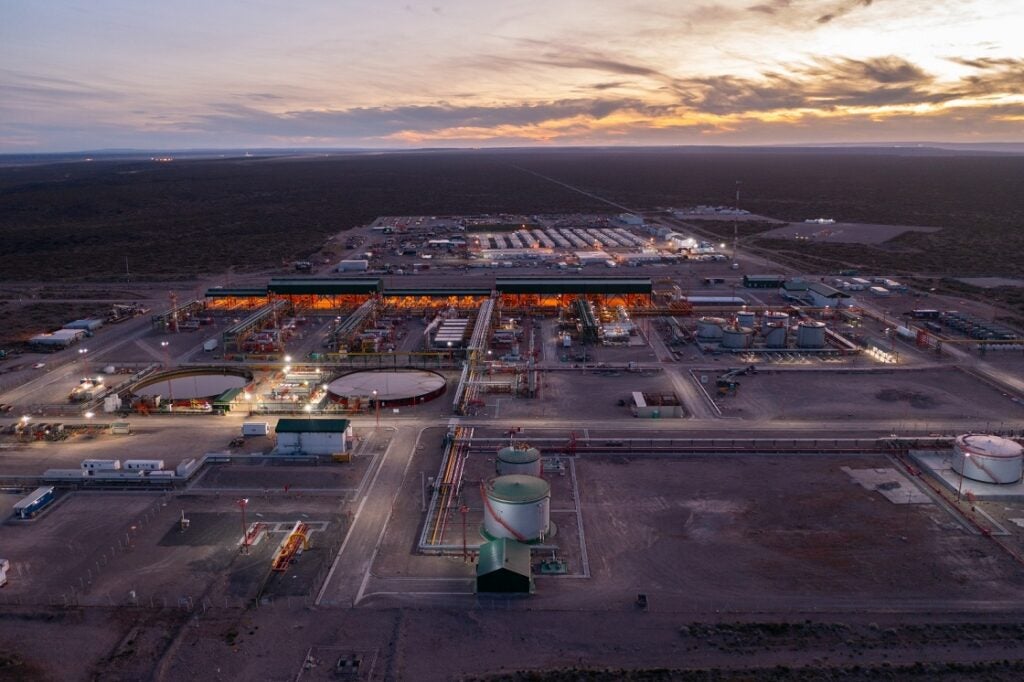
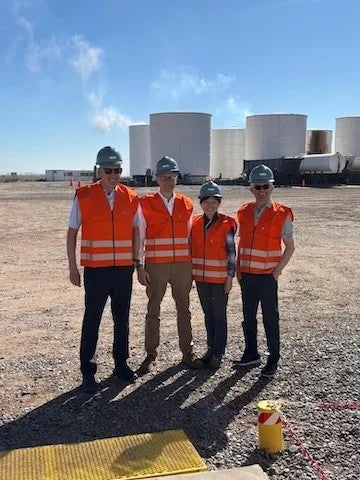
A delegation of researchers from Rice University’s WaTER Institute traveled to Argentina’s Neuquén province this month to help address a pressing question facing one of the world’s fastest-growing energy regions: how to balance rapid oil and gas development with long-term environmental sustainability.
Mar. 24, 2026
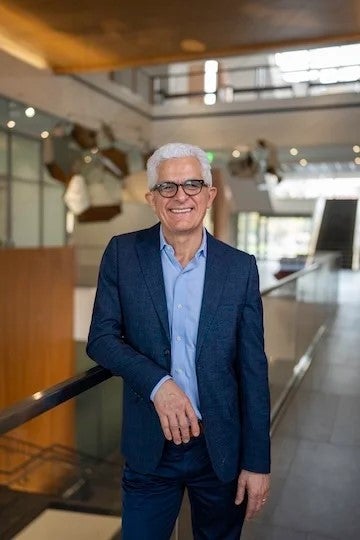
IDE Technologies, a world leader in desalination and advanced water treatment solutions, and Rice University’s Water Technologies Entrepreneurship and Research (WaTER) Institute, a multidisciplinary center advancing innovative water treatment technologies, energy transitions and resilient infrastructure, are proud to announce their strategic collaboration.
Mar. 23, 2026
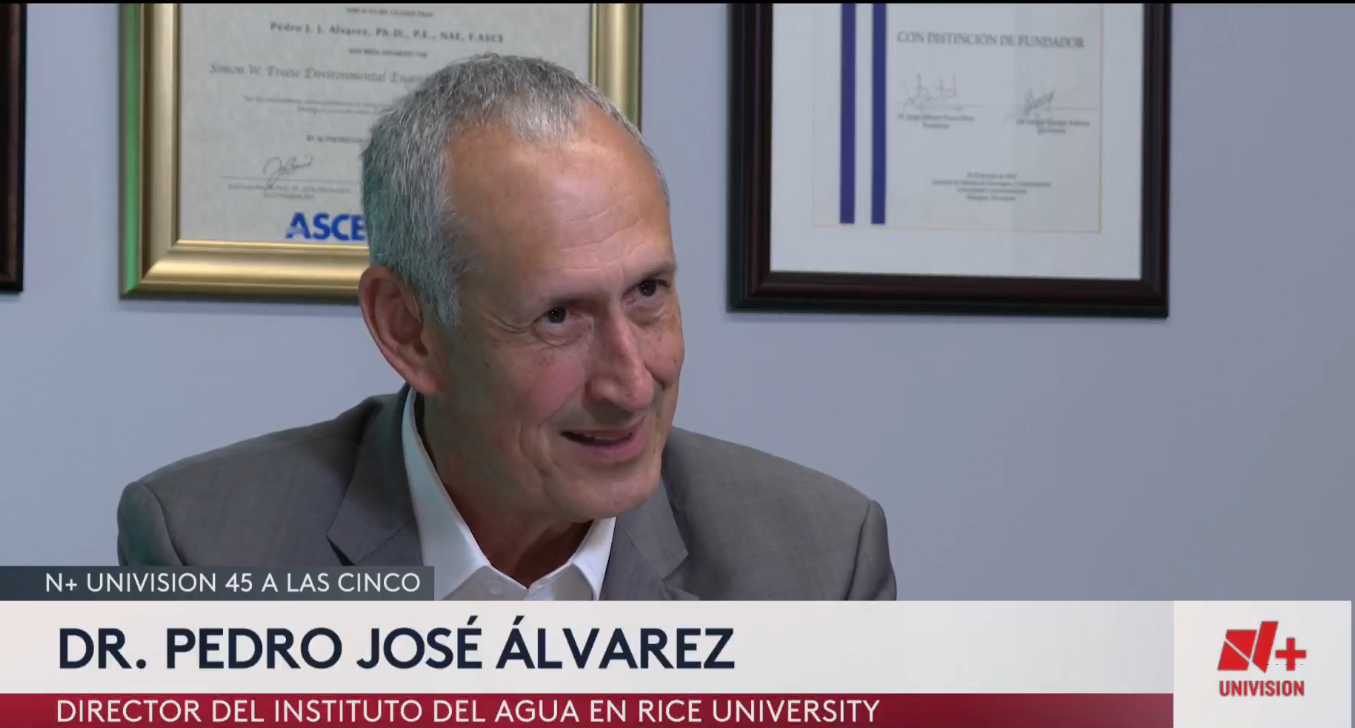
Univision 45 : Dr. Pedro Alvarez, Rice WaTER Institute Interview with Ana Bueno | SOLICITUD DE PERMISO PARA CONSTRUIR PLANTA DE SEPARACIÓN DE RESIDUOS “Application for permit to build a waste separation plant”
Link (Spanish)
Mar. 2, 2026
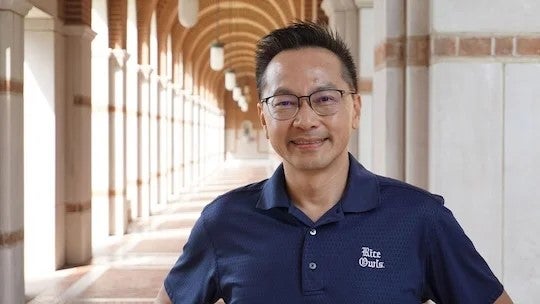
Michael S. Wong, the Tina and Sunit Patel Professor in Molecular Nanotechnology at Rice University, is available to speak with media about emerging strategies to address PFAS (per- and polyfluoroalkyl substances), widely known as “forever chemicals.” His research focuses on catalytic and low-energy approaches that aim not only to capture PFAS from water but to break them down into benign components — a shift that could reshape how communities and industries manage these persistent contaminants.
Feb. 18, 2026
When you turn on a faucet, charge an electric vehicle or use products made with clean hydrogen, you may not realize that membranes — ultrathin films perforated with pores too small to see — make these modern processes possible. They purify water, recover valuable minerals and help power emerging clean-energy technologies.
Feb. 16, 2026
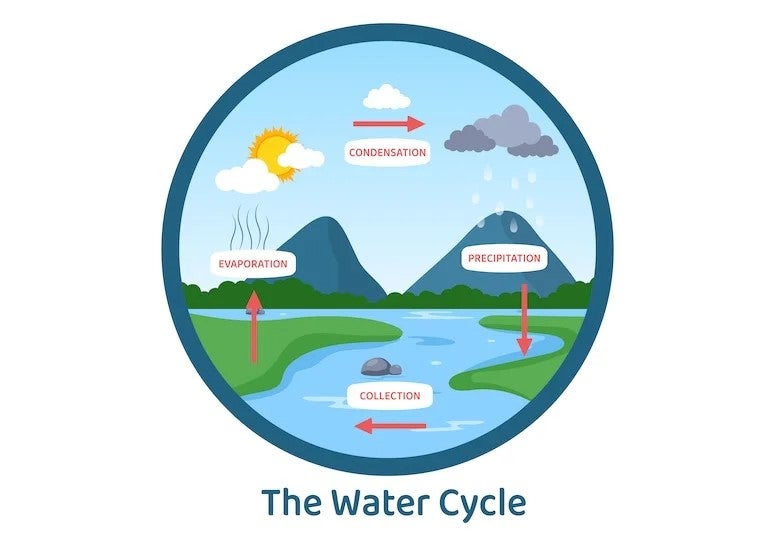
An international research team, including scientists from Rice University, the University of Tokyo and NASA, has completed the first fully standardized comparison of isotope-enabled climate models. In a recent study published in ESS Open Archive, the researchers showed that multimodel ensemble provides the most accurate representation of the present-day global water cycle.

Feb. 3, 2026
Also, how much should you trust the quality of the water coming out of the tap? Pedro Alvarez, director of Rice University’s WaTER Institute, explains what we should all know about the quality of water where we live and work.
Jan. 22, 2026
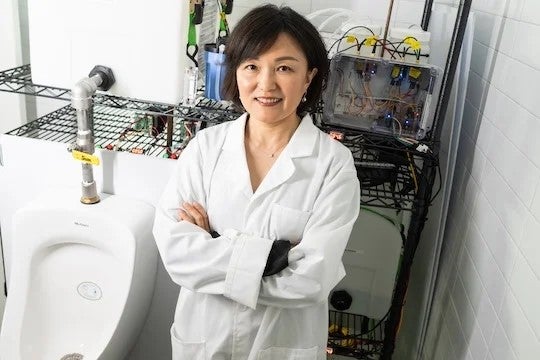
Researchers at Rice University’s WaTER Institute are leading an ambitious new effort to transform the way the world manages water and sanitation at the household scale. The project, funded by the Gates Foundation and in collaboration with Arizona State University, Clarkson University and Duke University, aims to develop modular, field-ready water treatment systems capable of recycling multiple household wastewater streams and dramatically reducing both water use and dependence on centralized infrastructure.

Dec. 16, 2025
Materials scientists at Rice University and collaborators have developed a material that uses light to break down a range of pollutants in water, including per- and polyfluoroalkyl substances, or PFAS, the “forever chemicals” that have garnered attention for their pervasiveness.

Oct. 17, 2025
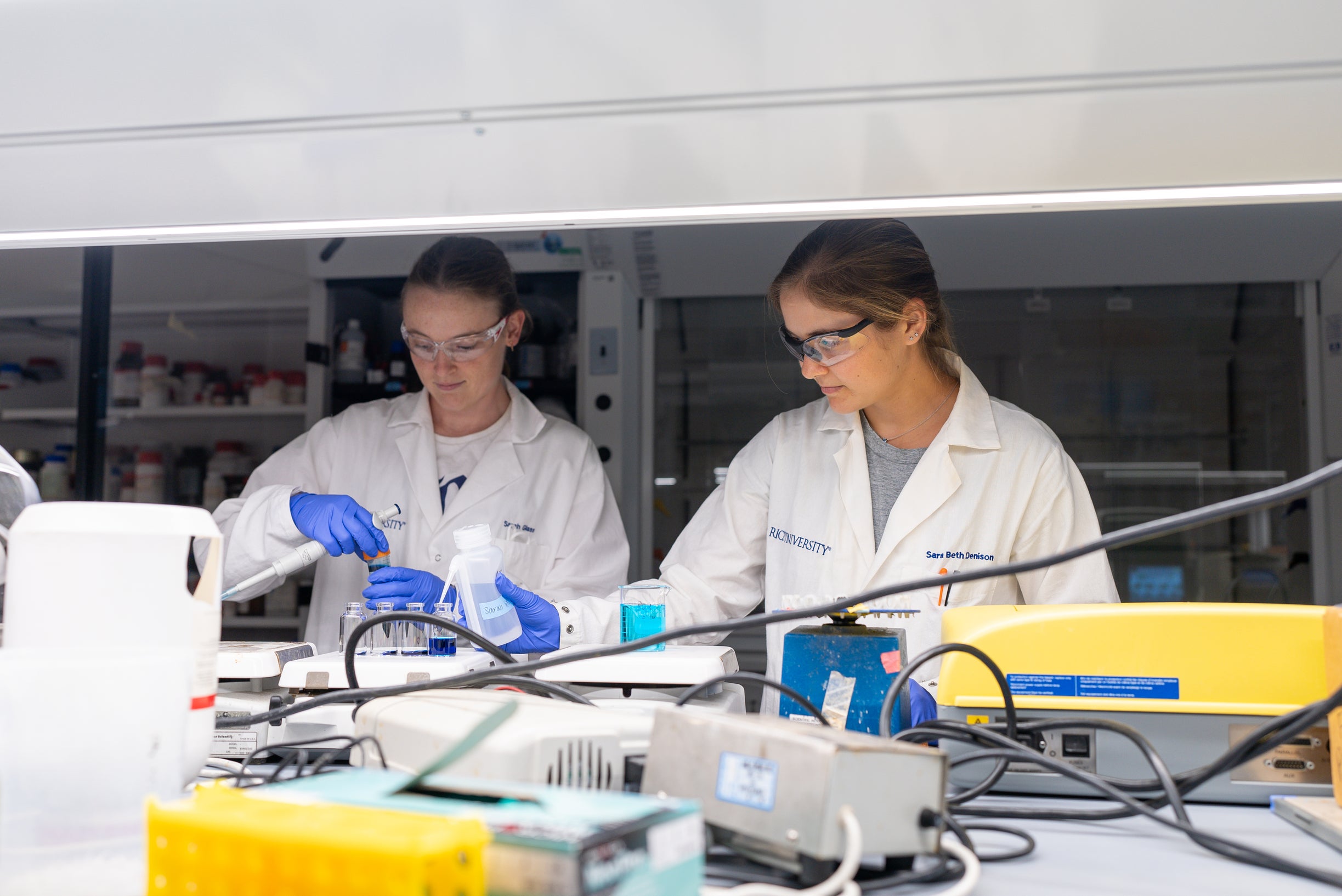
Rice University researchers, in collaboration with international partners, have developed the first eco-friendly technology to rapidly capture and destroy toxic “forever chemicals” (PFAS) in water. The findings, recently published in Advanced Materials, mark a major step toward addressing one of the world’s most persistent environmental threats.
Jun. 11, 2025

The system has been developed in the university’s labs and is currently intended for off-grid applications rather than full-scale coastal desalination.
May. 29, 2025
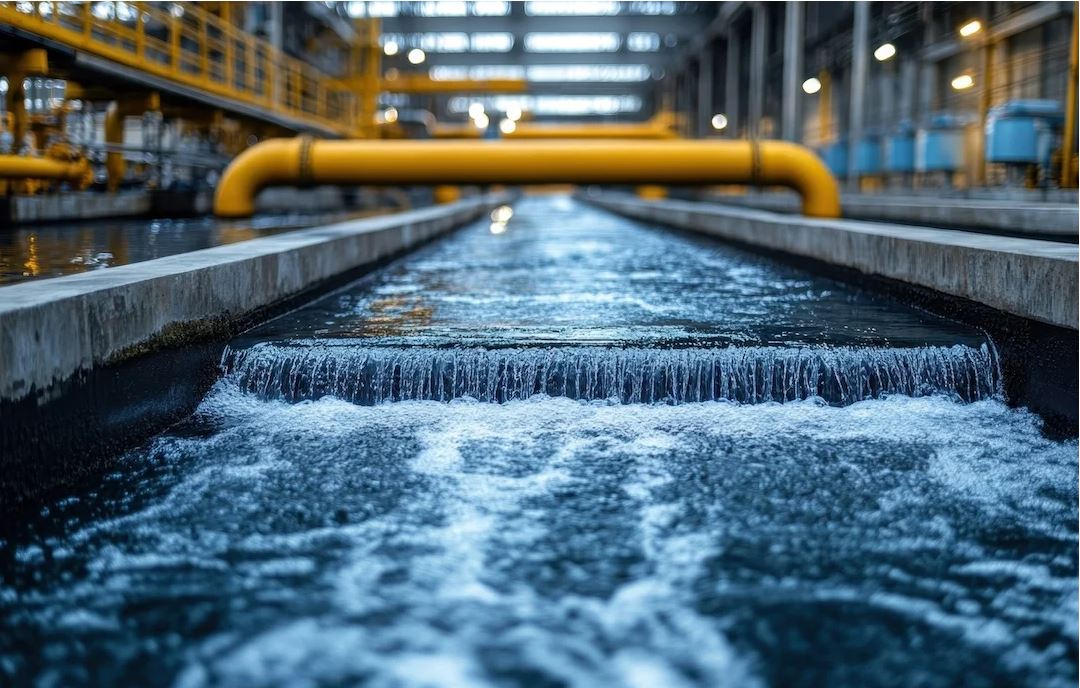
In a time of escalating climate risks, crumbling infrastructure and ballooning industrial demand, understanding how water and energy intertwine has never been more urgent. That was the resounding message from experts who convened May 19 in Washington, D.C., for “The Intersection of Water and Energy, 2025-2030,” a forum hosted by Rice University and Arizona State University.
May. 6, 2025
A team of researchers from Rice University, Carnegie Mellon University and other leading global institutions has outlined a bold new roadmap for harnessing heterogeneous catalysis to destroy per- and polyfluoroalkyl substances (PFAS), the so-called “forever chemicals” that have contaminated water supplies worldwide.
Jan. 27, 2025
POSTED IN: RICE ENGINEERING > News
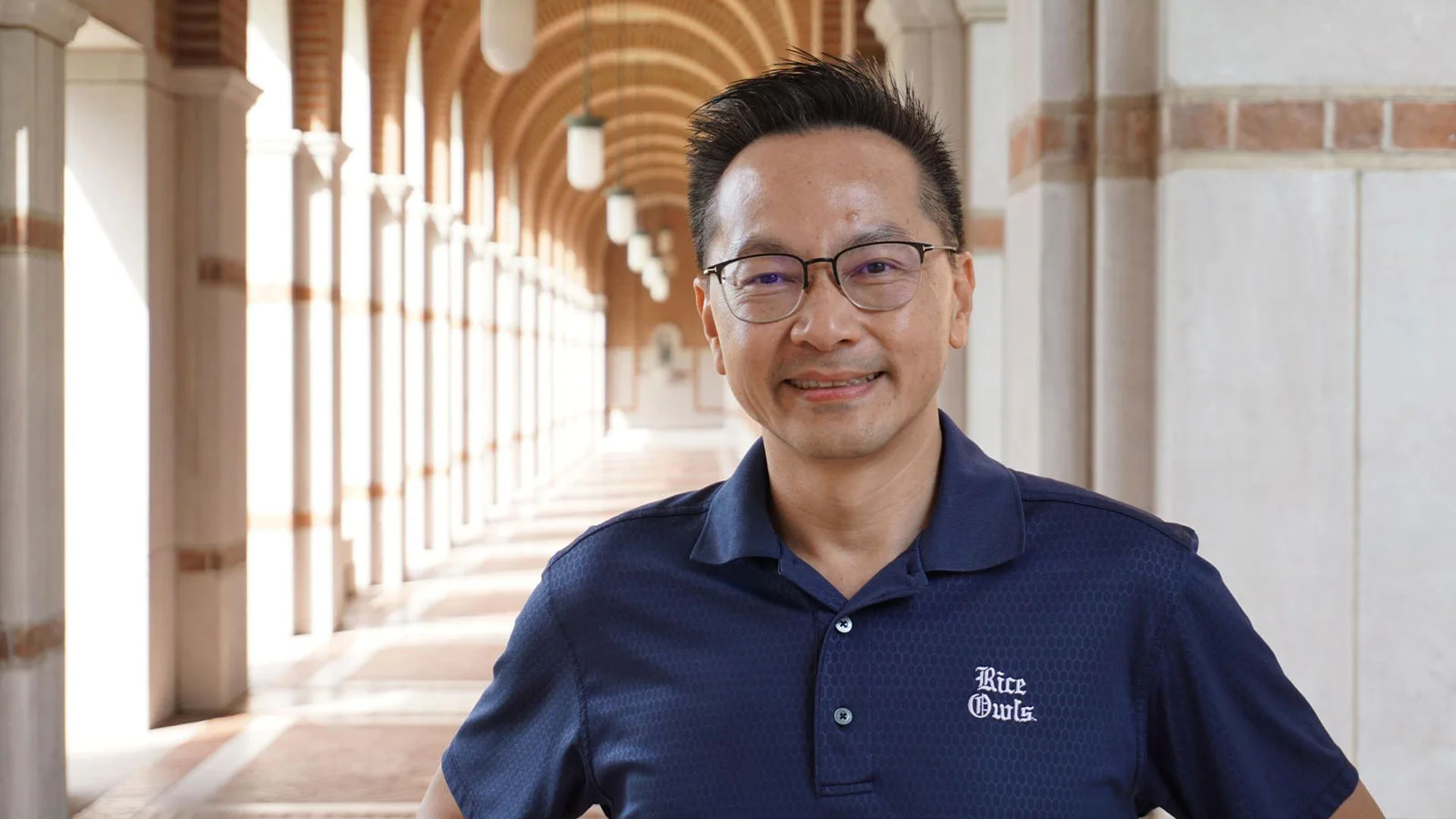
Michael Wong, the Tina and Sunit Patel Professor in Molecular Nanotechnology and chair of the Department of Chemical and Biomolecular Engineering at Rice, will receive the 2025 Henry J. Albert Award from the International Precious Metals Institute (IPMI).
Sep. 16, 2024
POSTED IN: RICE NEWS > Current News > 2024
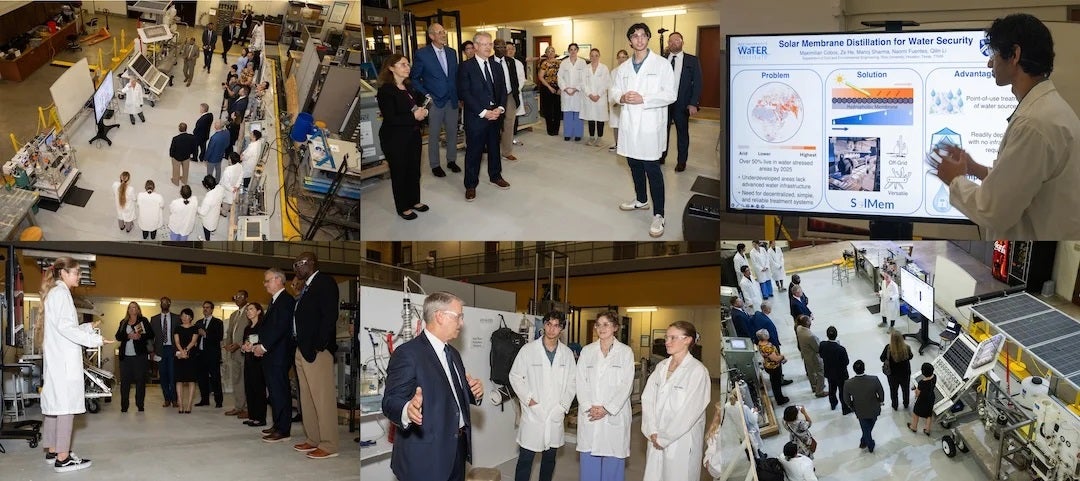
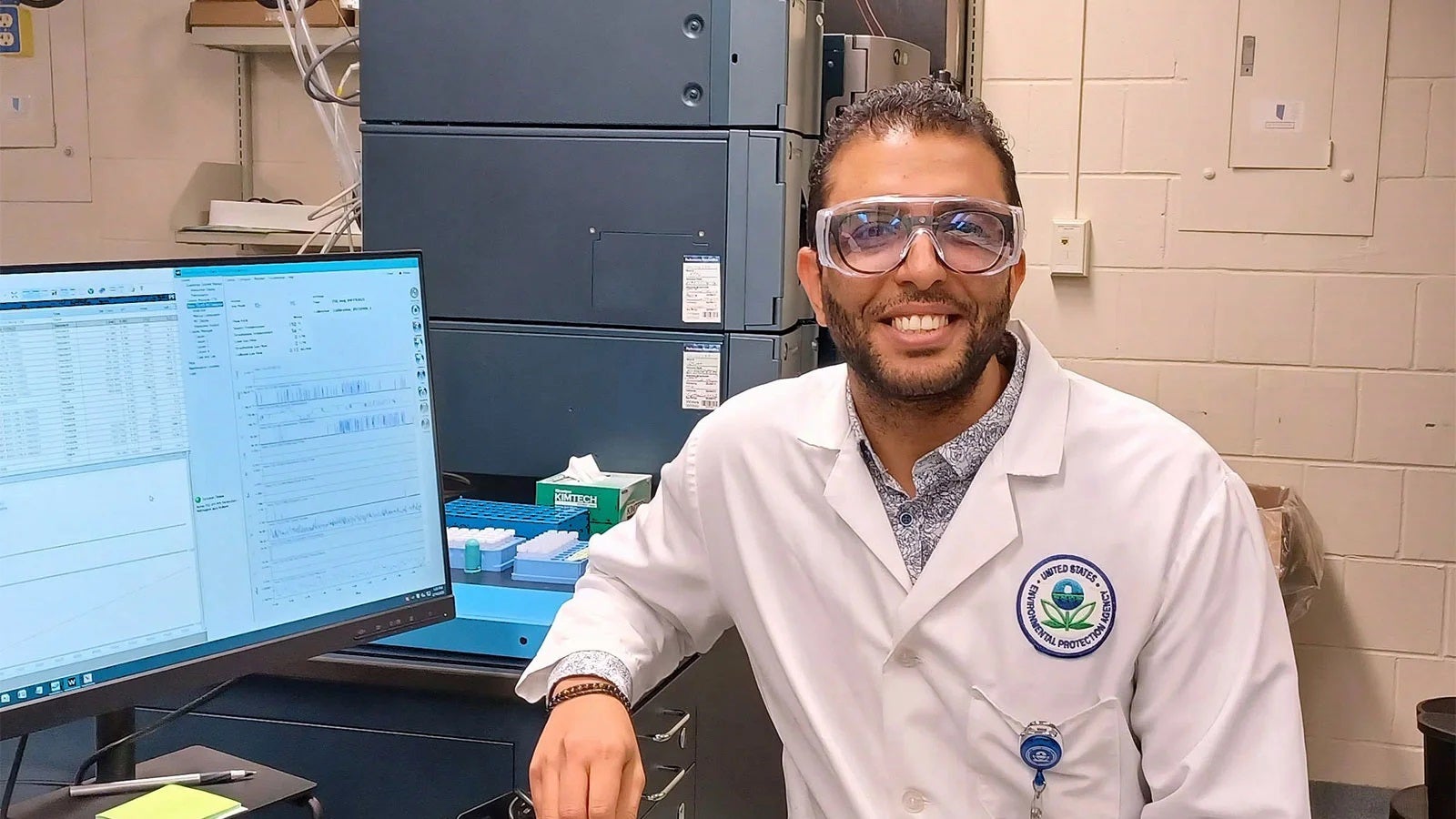
Rice University inaugurated a new research center dedicated to per- and polyfluoroalkyl substances (PFAS) Wednesday during a visit to campus by representatives of the United States Army Engineer Research and Development Center (ERDC).
Jul. 24, 2024
POSTED IN: RICE ENGINEERING > News
For 80 years, “forever chemicals” have been used to coat our pots and pans, put out fires and make our carpets resistant to stains, among many other applications.
Jul. 3, 2024
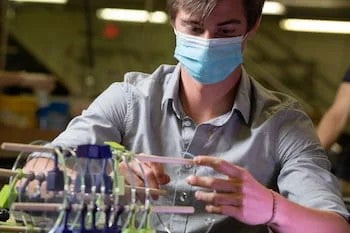
HOUSTON – (April 29, 2021) – Wind power has a bright future, but what happens when wind turbines power down? A worn blade the length of a football field isn’t easy to recycle.
Rice University engineering students are working on environmentally sensitive strategies to process decommissioned blades for recycling or disposal. The Bladecycle project, based at Rice’s Oshman Engineering Design Kitchen, requires them to think big.
Jul. 3, 2024
Silvia Cernea Clark - May. 19, 2023
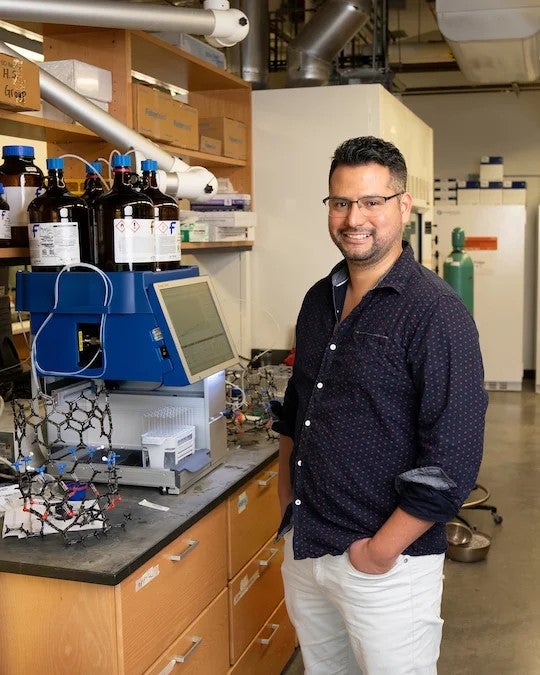
Rice University chemist Raúl Hernández Sánchez is one of 12 early-career scientists named to C&EN’s 2023 Talented 12 cohort for his research in inorganic and supramolecular chemistry.
Jul. 3, 2024
Mike Williams - Apr. 16, 2021
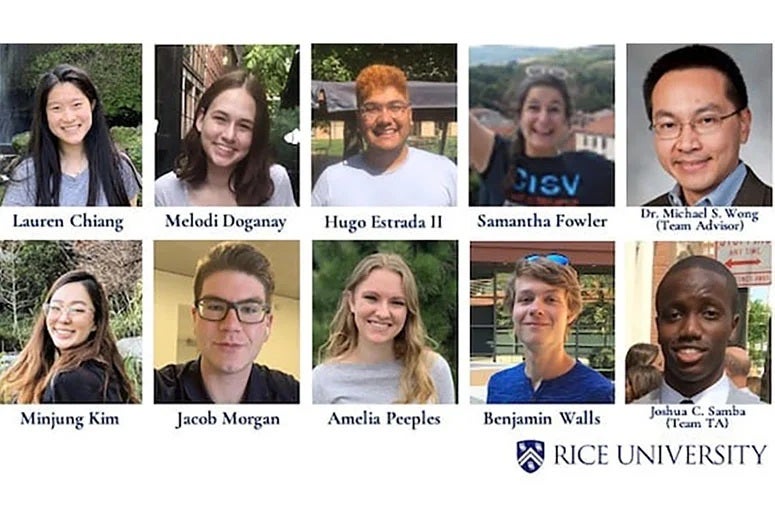
Students at Rice University’s Brown School of Engineering calling themselves “PFAS and PFurious” took four prizes, including first place, in this year’s 31st WERC Environmental Design Contest for their development of a system to remove harmful chemicals from fluids.
Jul. 3, 2024
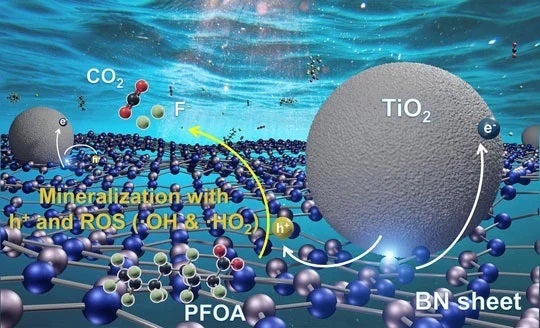
HOUSTON – (July 25, 2022) – Rice University chemical engineers have improved their design for a light-powered catalyst that rapidly breaks down PFOA, one of the world’s most problematic “forever chemical” pollutants.
Jul. 3, 2024
HOUSTON -- (July 7, 2020) -- Rice University chemical engineers found an efficient catalyst for destroying PFAS "forever" chemicals where they least expected.